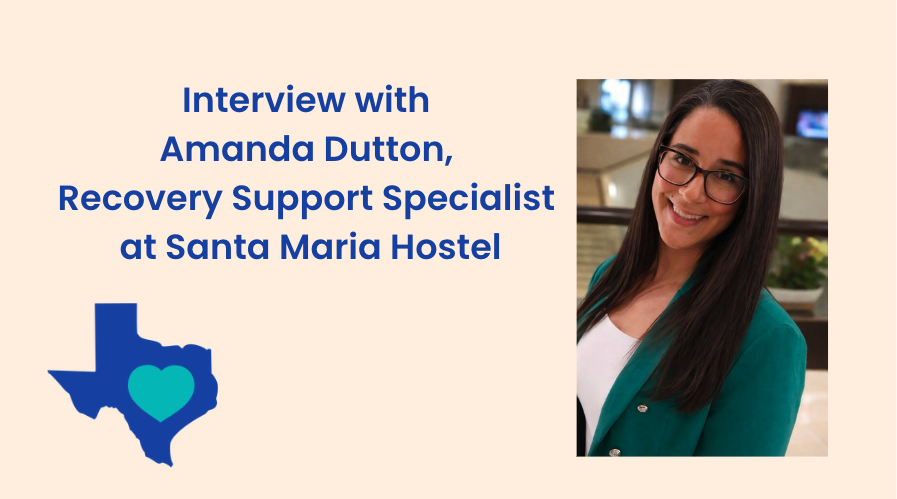
Amanda, for readers at Texas Adoption Center meeting you for the first time, how do you describe your work as a Recovery Support Peer Specialist and the communities you serve?
I love what I do and have a deep passion for helping the population I help. I work at Santa Maria Hostel with pregnant women and moms postpartum with babies 18 months and younger.
My role as a recovery support specialist is to help guide these women in their early recovery while navigating becoming a mother. I also provide help and support with all medical appointments.
We also deal with moms that have CPS so I walk with them through that journey as well. Our main focus is their recovery and staying sober so they can continually be the best mothers they can be.
What experiences led you into peer support with pregnant women facing substance use challenges, and how did that shape your approach today?
The experience that led me to peer support with pregnant women is that I WAS the pregnant woman at Santa Maria in 2020 obtaining the same services that I give the women today. The hope that I was given is my main drive for the hope that I give.
I know firsthand what it feels like to be pregnant and battling substance use disorder. It is so near and dear to my heart! It is possible, we do recover! The way I shape my approach is by sharing my story and experiences in hopes that they begin to believe in themselves.
When you first meet an expectant mom who is using substances, what do you do in the first 10 minutes to create safety and trust?
In the first 10 minutes, I make sure they understand that I understand. I make them feel heard and understood. That they are not alone and that I was in their shoes just a few years ago.
I listen to their needs and wants and ensure them that I will be side by side with them throughout the process.
Which trauma-informed practices have proven most effective for you in reducing shame and keeping moms engaged in care during pregnancy?
Safety, showing they can trust me, and being transparent. This allows them to open up so we can uncover what will truly work best for mom and baby.
I think my key piece is that I have been there. That right there is the best practice. My experience.
How do you help clients in Texas navigate prenatal care and medications for opioid use disorder while advocating for them in clinics and hospitals?
We have everything in our clinic from OB, to MAT services, to both psychiatrist and psychologist, ultrasound, recovery coaches, parent coaches, and social workers.
It’s a space where birth mothers are not judged or stigmatized and where they can open up about their struggles without hindering them, but actually helping them.
How do you prepare clients for delivery and potential hospital reporting or CPS involvement in Texas in a way that lowers fear and increases agency?
I’m very transparent and reassure that no matter the outcome we will be here throughout every step.
When a client is considering adoption, how do you collaborate with adoption professionals to support a noncoercive, recovery-centered decision process?
I ensure the mother gets set up with the Texas Adoption Center and let their specialists take over from there. I also provide comfort and reassurance by speaking on my own experience as I also chose adoption for my second child when I was in the depths of my addiction.
What do you want adoptive families to know about caring for newborns with prenatal substance exposure and about building a respectful relationship with the birth mom in recovery?
I want them to know that it can be very hard, and it’s a sensitive subject. And most importantly, to please hear what mother has to say and understand that the baby may need some extra care.
In the first six weeks after birth, what supports do you prioritize to help moms maintain recovery and stability, regardless of parenting or placement?
I focus in ensuring that the birth mother is always able to share how they are feeling. It is important to let them know they have a whole team who will walk with them. We have bed rest and an amazing clinical team as well. We also prioritize fighting to get baby back if that is the case, and staying sober to be able to achieve that.
Thanks for sharing your knowledge and expertise. Is there anything else you’d like to add?
I absolutely love what I do! It’s a very special population and I will always, no matter what my degree ends up being, (as I am in school) will work with pregnant women suffering with substance use disorder.
For readers at Texas Adoption Center, could you introduce yourself and share what you do as an Executive Director in nonprofit management focused on children and social services?
My name is Janelle Basham, and I serve as the Executive Director of BraveLove, a nonprofit dedicated to changing the perception of adoption by honoring birth mothers, sharing honest stories, and providing educational resources for professionals and the public.
My connection to this work is both professional and deeply personal. I became pregnant at 16 and made an adoption plan for my daughter, who is now an adult. That experience has shaped the course of my life and fuels my commitment to supporting women and families navigating the adoption journey.
In my role at BraveLove, I help guide the organization’s strategy, partnerships, and programs focused on storytelling, education, and community. Our work centers on creating spaces where adoption can be discussed with honesty and compassion—highlighting the voices and experiences of birth mothers while equipping professionals and communities with resources that foster understanding and support.
What pivotal experiences or mentors guided you into nonprofit leadership and toward work that intersects with adoption?
My path into nonprofit leadership and adoption work really began with my own story. When I was 16, I experienced an unplanned pregnancy and moved into a maternity home while trying to figure out what my future—and my daughter’s future—might look like. During that time, there were people—my social worker, counselor, and volunteers—who showed up for me with compassion, honesty, and encouragement. They gave me space to explore all of my options and to grieve the hard realities I knew were ahead.
They didn’t make the decision for me, but they created space for me to learn, ask questions, and ultimately make a plan that I believed was best for my daughter. Watching the way they cared for women during such a vulnerable season shaped my understanding of what thoughtful leadership in this space could and should look like.
The care and dignity I experienced during that season left a lasting imprint on my life and sparked a desire to support those coming behind me in their own adoption journeys.
From your community outreach across Texas, which adoption stigmas do you see most often that organizations should prioritize addressing first?
Adoption is deeply complex, and the stigma surrounding it is often rooted in misunderstandings about the people involved—birth parents, adoptees, and adoptive families alike.
One of the most significant stigmas I see is the sense of shame that can surround adoption and the individuals connected to it. For birth parents, that shame may come from assumptions about their decision, situations, or feelings that led them to an adoption plan. For adoptees and adoptive families, it can surface through misunderstandings about identity, belonging, or family structure. Much of this stems from limited knowledge or the way adoption is sometimes discussed in communities.
Language matters. When we use thoughtful and respectful adoption language, it honors everyone involved in the story. Words have the power either to reinforce stigma or to create greater understanding and compassion.
Organizations have an important opportunity to lead in this area by being intentional about how adoption is discussed and by creating spaces where all voices within the adoption community can be heard. When we honor the experiences of everyone involved, we help ensure that the child at the center of the story can grow up feeling secure in their identity and confident that they are deeply loved.
Thinking about program development, what single outreach tactic have you implemented that clearly shifted perceptions about adoption?
One of the most impactful outreach tactics BraveLove has implemented is creating a platform for honest storytelling from those whose lives have been touched by adoption.
When people are given space to share their experiences openly—whether birth parents, adoptees, adoptive parents, or others impacted—it helps remove the shame and misunderstandings that often surround adoption. It also creates room to acknowledge both the meaningful and the difficult parts of the journey so the adoption community can continue to learn and grow.
Through stories shared in videos, writing, and conversations, we’ve seen perceptions begin to shift. Instead of viewing adoption through stereotypes or simplified narratives, people start to see the real individuals and families behind each story and gain a deeper understanding of the love, complexity, and lifelong impact involved.
Storytelling creates a bridge that moves communities from misunderstanding toward empathy and respect.
How do you train staff and volunteers to discuss birth parents, adoptive families, and open adoption in ways that reduce shame and misinformation?
When training staff and volunteers, we need to acknowledge that adoption is complex and deeply personal for everyone involved—birth parents, adoptees, and adoptive families. Because of this, the way adoption is discussed matters.
A key focus is using respectful adoption language that avoids phrases that may unintentionally reinforce shame or stereotypes. The words we choose shape how people understand adoption and can either contribute to misunderstanding or encourage greater compassion and respect.
It’s important to spend time helping people understand modern adoption practices, including open adoption. Many people still carry outdated assumptions about what adoption looks like today. Providing clear information about openness and communication helps reduce misinformation and gives people a more accurate understanding of how relationships can exist between birth families and adoptive families.
We always emphasize the importance of listening to lived experiences. Hearing directly from birth parents, adoptees, and adoptive families helps people better understand the emotional depth and lifelong impact of adoption.Ultimately, we encourage conversations about adoption that recognize the dignity of everyone involved and support a child’s ability to grow up feeling secure in their identity and story.
In your public relations and fundraising campaigns, how do you craft ethical, strengths-based stories about adoption that protect privacy?
When sharing adoption stories, we begin with consent and collaboration. Individuals choose whether they want to share their story, how much they feel comfortable sharing, and how their experience will be represented. That level of transparency and partnership is essential.
We also focus on strength-based storytelling. Adoption stories are often complex and deeply personal, so our goal is to present them with honesty while highlighting resilience, love, and the thoughtful decisions people make along the way. We want stories to honor the dignity of everyone involved—birth parents, adoptees, and adoptive families—rather than oversimplify or sensationalize the experience.
Protecting privacy is also a key priority. We are careful about what details are shared and always allow individuals to review their story before it is published. In some cases, names or identifying details are changed or omitted to ensure that people feel safe and respected.
Ultimately, our goal is to share stories that educate and inspire while honoring the people behind them and protecting the relationships that continue long after the story is told.
Which partnership—such as with schools, healthcare providers, faith communities, or child welfare agencies—has been most effective for reaching audiences where stigma is strongest?
Our most meaningful impact has come through partnerships with organizations that already walk closely with individuals and families during important seasons of life—particularly adoption agencies, healthcare providers, pregnancy resource centers, and schools or universities.
These spaces often support individuals navigating complex decisions and help shape how adoption is understood within the broader community. When professionals have access to accurate information about adoption, it can reduce stigma and foster supportive conversations. Many of these partners utilize our free resources and videos to help guide those conversations and provide reliable information about modern adoption.
Partnerships like these allow us to meet people where questions and misunderstandings already exist and replace stigma with more informed conversations about adoption.
For birth parents and adoptive families navigating stigma day to day, what practical talking points or responses do you recommend?
When birth parents and adoptive families encounter stigma or difficult questions, it helps to have simple, respectful responses ready—because those questions will come, often while standing in line at the grocery store or at a school function. Many questions come from curiosity but may carry assumptions. And, as we all know, these conversations often happen when little ears are listening, making the words we choose even more important.
Birth parents may reframe a question by saying, “I didn’t give my child up—I made an adoption plan for my child.” Adoptive families can acknowledge the full story by sharing limited information, such as, “Our child has a birth family who loves them, and we are so thankful for that connection.”
It’s also important to know who to share with and how much of the story to share. Over the years, I’ve learned to assess when it’s helpful to educate someone and when it’s better to hold certain parts of my story close—especially if the person may not have the best intentions. At times, it’s also okay not to respond at all. Having a simple phrase ready—such as “That’s a personal part of our story”—can respectfully close the conversation.
Being confident in your response also sets a tone of respect. Often the goal isn’t to debate, but to model thoughtful language and set healthy boundaries. Over time, these everyday conversations can help shift how adoption is understood.
Looking ahead in Texas, what one policy or community-development initiative should nonprofits and supporters rally around to reduce adoption stigma?
One initiative I believe supporters should rally around is expanding adoption education and awareness in schools and community spaces. Many of the stigmas surrounding adoption exist because people have not been given accurate information or heard honest experiences from those whose lives have been impacted by adoption.
When young people grow up hearing honest conversations about adoption, it helps create communities where children connected to adoption feel less misunderstood and more supported. It also creates space to acknowledge that those experiences can include both love and loss, joy and grief. Families are formed in many ways—including through foster care, domestic private, international, stepparent, and kinship adoptions—and each child’s experience is unique.
By equipping educators, community leaders, and youth programs with resources and voices from the adoption community, we can help shape a generation that approaches adoption with greater care and understanding. Over time, this kind of community investment helps children connected to adoption feel respected while also helping their peers develop greater awareness and empathy when talking about adoption.
Thanks for sharing your knowledge and expertise. Is there anything else you’d like to add?
One thing I would add is that adoption conversations are evolving, and that’s a good thing. As more people feel comfortable sharing their experiences—whether they are birth parents, adoptees, or adoptive families—we have the opportunity to move toward greater honesty and understanding.Adoption is complex, and every story is unique. Some experiences include joy and connection, while others include grief or unanswered questions. Making space for the full range of experiences allows us to support children and families with greater care and compassion.
My hope is that we continue creating environments where people feel safe to share their stories, ask questions, and learn from one another. When we approach adoption with humility, respect, and a willingness to listen, we help build communities where every person connected to adoption can feel seen and valued.