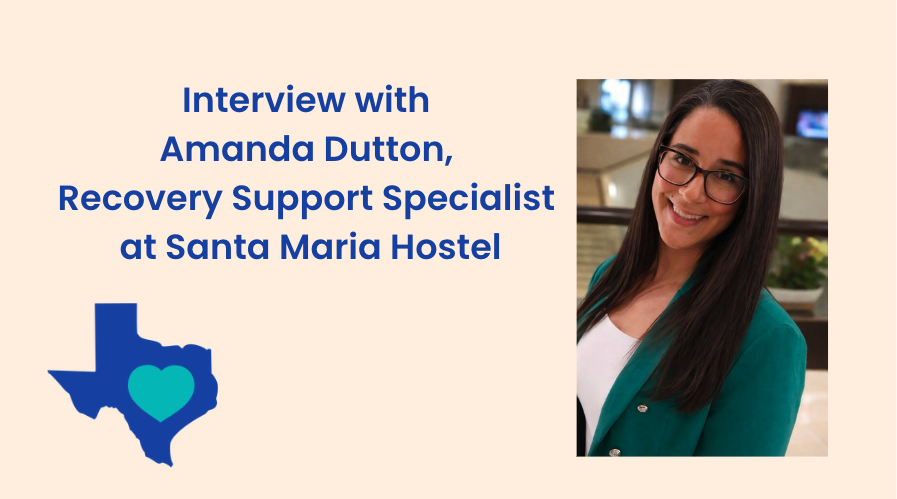
Amanda, for readers at Texas Adoption Center meeting you for the first time, how do you describe your work as a Recovery Support Peer Specialist and the communities you serve?
I love what I do and have a deep passion for helping the population I help. I work at Santa Maria Hostel with pregnant women and moms postpartum with babies 18 months and younger.
My role as a recovery support specialist is to help guide these women in their early recovery while navigating becoming a mother. I also provide help and support with all medical appointments.
We also deal with moms that have CPS so I walk with them through that journey as well. Our main focus is their recovery and staying sober so they can continually be the best mothers they can be.
What experiences led you into peer support with pregnant women facing substance use challenges, and how did that shape your approach today?
The experience that led me to peer support with pregnant women is that I WAS the pregnant woman at Santa Maria in 2020 obtaining the same services that I give the women today. The hope that I was given is my main drive for the hope that I give.
I know firsthand what it feels like to be pregnant and battling substance use disorder. It is so near and dear to my heart! It is possible, we do recover! The way I shape my approach is by sharing my story and experiences in hopes that they begin to believe in themselves.
When you first meet an expectant mom who is using substances, what do you do in the first 10 minutes to create safety and trust?
In the first 10 minutes, I make sure they understand that I understand. I make them feel heard and understood. That they are not alone and that I was in their shoes just a few years ago.
I listen to their needs and wants and ensure them that I will be side by side with them throughout the process.
Which trauma-informed practices have proven most effective for you in reducing shame and keeping moms engaged in care during pregnancy?
Safety, showing they can trust me, and being transparent. This allows them to open up so we can uncover what will truly work best for mom and baby.
I think my key piece is that I have been there. That right there is the best practice. My experience.
How do you help clients in Texas navigate prenatal care and medications for opioid use disorder while advocating for them in clinics and hospitals?
We have a clinic at Ben Taub hospital who we partner with. It’s called the MPAT clinic (Maternal Perinatal Addiction Treatment Services).
We have everything in our clinic from OB, to MAT services, to both psychiatrist and psychologist, ultrasound, recovery coaches, parent coaches, and social workers.
It’s a space where birth mothers are not judged or stigmatized and where they can open up about their struggles without hindering them, but actually helping them.
How do you prepare clients for delivery and potential hospital reporting or CPS involvement in Texas in a way that lowers fear and increases agency?
I’m very transparent and reassure that no matter the outcome we will be here throughout every step.
When a client is considering adoption, how do you collaborate with adoption professionals to support a noncoercive, recovery-centered decision process?
I ensure the mother gets set up with the Texas Adoption Center and let their specialists take over from there. I also provide comfort and reassurance by speaking on my own experience as I also chose adoption for my second child when I was in the depths of my addiction.
What do you want adoptive families to know about caring for newborns with prenatal substance exposure and about building a respectful relationship with the birth mom in recovery?
I want them to know that it can be very hard, and it’s a sensitive subject. And most importantly, to please hear what mother has to say and understand that the baby may need some extra care.
In the first six weeks after birth, what supports do you prioritize to help moms maintain recovery and stability, regardless of parenting or placement?
I focus in ensuring that the birth mother is always able to share how they are feeling. It is important to let them know they have a whole team who will walk with them. We have bed rest and an amazing clinical team as well. We also prioritize fighting to get baby back if that is the case, and staying sober to be able to achieve that.
Thanks for sharing your knowledge and expertise. Is there anything else you’d like to add?
I absolutely love what I do! It’s a very special population and I will always, no matter what my degree ends up being, (as I am in school) will work with pregnant women suffering with substance use disorder.